What golf ball should I use? Take the 90-second golf ball fitting quiz.
72 balls from every major brand, scored against your swing speed and your usual miss.
Brand selectors only pick from their own shelf. Our golf ball selector ranks all 72 balls from every major brand, from the $58 Pro V1 to the $15 Kirkland, and names the one ball you should be playing.
Free 90-second quiz and fitting report · Your #1 ball out of 72 · Know which dozen to buy next
 Example match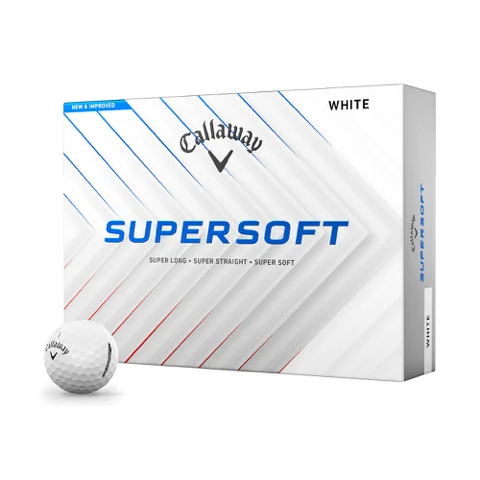
Callaway
Supersoft
96
Feel
71
Spin
90
Flight
What golf ball should I use? Start with your driver swing speed, your usual miss and how hard you want wedges to stop. BallCaddie’s brand-neutral golf ball fitting quiz takes those answers, plus feel and budget, and scores 72 balls from Titleist, Callaway, TaylorMade, Bridgestone, Srixon, Vice, Snell and more in about 90 seconds. Think of it as a golf ball finder built around your swing speed.
72
Golf balls analyzed
Titleist, Callaway, TaylorMade, Bridgestone, Srixon, Vice, Snell, Cut, Wilson, Mizuno, and more
90s
Fitting time
Median quiz completion — no launch monitor required
100%
Brand-neutral
No affiliate payments from ball manufacturers
2026
Database season
Refreshed each season with new releases
What quiz takers told us about their game
The typical golfer who takes the quiz swings 85–99 mph, hits it mostly straight with a little right turn, and wants more distance. What they’d fix first changes with speed: 68% of golfers under 85 mph pick more distance, while 53% of those at 100 mph and up pick straighter drives. A brand’s ball selector can’t show you this.
Driver swing speed
- Under 85 mph24%
- 85–99 mph48%
- 100–110 mph21%
- 110+ mph7%
How they answered
- Tee shots: "I want more distance"46%
- Tee shots: "I want it to go straighter"38%
- Shot shape: "Mostly straight, little right"43%
- Shot shape: "Right (fade or slice)"28%
- Feel: "Soft"35%
Self-reported answers from BallCaddie quiz takers, as of September 2026. Each bar is one answer to one question, so the right-hand bars don’t add to 100%.
Golf ball fitting chart: your swing speed and your miss
Find your driver speed, then your usual miss. The chart gives the type of ball to look for. The quiz narrows it to real balls using your short game, feel and budget too. For compression numbers, see the golf ball compression chart.
Under 85 mph
- Curves right
- Lowest driver spin: a soft ionomer ball
- Flies too low
- A higher-flying ball. Softer doesn’t mean higher.
- Balloons too high
- A lower-flying ball
- Mostly straight
- Pick on feel and price. A soft ball adds no driver speed.
85–99 mph
- Curves right
- A low-spin urethane ball
- Flies too low
- A higher-flying urethane ball
- Balloons too high
- A lower-flying urethane ball
- Mostly straight
- A mid-spin urethane ball, firmer for distance
100+ mph
- Curves right
- A low-spin tour ball
- Flies too low
- A higher-launching tour ball
- Balloons too high
- A lower-spin, lower-flight tour ball
- Mostly straight
- A firm tour ball for speed and wedge spin
Ball types, not named picks. Curving it a lot? Read the best golf ball for a slice. Or take the 90-second quiz: your fitting report is free; naming your #1 ball is paid.
How BallCaddie ranks golf balls.
BallCaddie’s fitting engine scores each ball across five dimensions: compression matched to the feel you want, cover material matched to short-game priority, trajectory profile, feel preference, and price tier. Specifications come from manufacturer datasheets, the USGA conformance list, and independent robot testing published by MyGolfSpy. BallCaddie takes no affiliate payments from ball manufacturers.
How our golf ball selector works, in 4 steps
Tell Us About Your Game
A guided quiz covers feel, spin, flight, handicap, and budget. 90 seconds, no jargon.
Cover, mantles, core — the layers BallCaddie scores you against.
Modern golf balls run from 2-piece distance models — one large core under a hard ionomer cover — to 4- and 5-piece tour balls that stack a dual core inside two or three mantles under a thin urethane shell. Each added layer lets engineers tune spin and feel separately for the driver, irons, and wedges.
Urethane vs. ionomer covers — what each layer actually does →
Even Jordan Spieth was playing the wrong golf ball.
For more than a year, Spieth’s iron shots felt pure off the face but kept landing short. He was playing the highest-spinning ball on the market because he assumed his long-iron game needed it — an assumption that quietly went out of date as his swing evolved.
“I’ve always played the highest spinning ball because I thought I needed it in the long irons. Now with this, whatever my makeup is and then just kind of added speed, my spin rates have been fine if not too high. So it’s actually kind of nice to be able to drop it down a little bit.”
Same launch height. 300–500 rpm less spin. Round-one 65 in Miami.
If a 3× major winner can play the wrong ball for years, the odds your last fitting still matches your current swing aren’t great either. BallCaddie sorts it in 90 seconds — no launch monitor required.
Reporting and quote: Jonathan Wall, Golf Digest, May 2026.
A real golfer took the quiz on camera.
Watch John talk through every answer, then react when BallCaddie reveals his match.
“It could save me 1.9 strokes per round… nothing like going into a round with confidence.”
Got matched 97% to the Titleist Pro V1 in 90 seconds — switching from the Pro V1x he’d been playing.
John Tiedemann
@xforedadsgolf on InstagramReady to find your match?
90 seconds, no launch monitor. Sign up to see your #1 ball.
A golf ball selector that scores every brand the same way
You hit your golf ball on every shot, driver to putter. A brand's selector can only point you to that brand's balls.
The problem
- ✕ Brand quizzes always recommend their own ball
- ✕ A brand's fitting day only fits that brand's balls
- ✕ Buddy recommendations aren't science
- ✕ Buying a dozen to test one ball gets expensive
The solution
- ✓ Brand-agnostic — every ball in the database, scored equally
- ✓ Strokes Saved Estimate before you tee off
- ✓ Smart Buy Plan — try a sleeve, not a dozen
- ✓ Picks adjusted for cold-weather rounds
- ✓ Re-Fit prompts when your game changes
Which golf ball is right for you? We check all 72 models.
Feel-First Fitting
Most tools start with driver speed. BallCaddie fits around feel, spin, and scoring — the things that separate good rounds from great ones.
Settle the Debate
Compare any two balls head-to-head using YOUR fitting profile. Compression, feel, spin, trajectory, price — all scored. Arguments settled in seconds.
Caddie Mode
A/B test two balls on the course with three real-world missions.
Smart Buy Plan
Try a sleeve first. We break down cost and give a 3-round protocol.
Full Catalog
Every ball compared side-by-side with filters and spec breakdowns.
Cold Weather
Tell the quiz your usual temperature. At 55°F or colder, your picks are adjusted for cold rounds.
Stop guessing. Start matching.
Built on real fitting logic — not marketing hype.
Learn the science behind the right ball.
Data-backed fitting guides — built on manufacturer datasheets, USGA conformance data, and independent robot testing.
Golf Ball Compression Chart
Every major ball’s measured compression on a single calibrated gauge — and which tier fits your swing speed.
Read guideBest Golf Ball for Spin
Driver spin and greenside spin are different problems. Top picks for each, with full RPM data across every club.
Read guideBest Golf Balls for High Handicappers
Soft, low-compression picks ranked by what actually lowers scores for 90+ shooters — not tour spin you can’t yet use.
Read guideBest Low Compression Golf Balls
The softest-feeling balls on one calibrated gauge, and what a soft core does and doesn’t change off the driver.
Read guideTitleist Fitting Tool vs. BallCaddie
Honest review of Titleist’s online fitting tool: what it does well, what it can’t tell you, and when a brand-neutral quiz wins.
Read guideBest Golf Ball for a Slice
Low-spin, low-compression picks that curve less. What ball choice can fix, what it can’t, and the honest 5–15 yard mitigation.
Read guideCommon questions about golf ball fitting.
Last updated:
What golf ball should I use?
Start with your driver swing speed, your usual miss and how much you want wedges to stop. Under 85 mph, pick on feel and price; if you curve it right, a soft ball spins least off the driver. At 85 to 99 mph, a mid-spin urethane ball is the usual starting point. At 100 mph and up, look at firm tour balls. BallCaddie's 90-second golf ball fitting quiz narrows all 72 balls to the ones that fit your answers.
How does BallCaddie recommend a golf ball?
You answer a 90-second quiz about your swing, your short game, what you want from a ball, and your budget. BallCaddie scores 72 real-world golf balls against your answers — compression, spin, cover, feel, price — and returns the ones that actually fit, not the ones with the biggest marketing budget.
Is BallCaddie free?
The quiz, the ball catalog and your six-section Ball Fitting Report all cost nothing. The one paid part is the named answer: your #1 ball, your #2 and #3 with the reasoning behind each, and your Smart Buy Plan. That is the $29 one-time Full Unlock, which also opens Caddie Mode on-course testing, My Bag, saved fittings and unlimited re-fits. It never renews and there is nothing to cancel. BallCaddie Pro at $4.99/month is the same feature set on monthly billing.
How is this different from Titleist's or Callaway's ball selector?
Brand selectors only recommend their own balls. BallCaddie's golf ball selector is brand-neutral: the quiz scores 72 models across Titleist, Callaway, TaylorMade, Bridgestone, Srixon, Vice, Wilson, and more — and recommends whatever fits your game, with no affiliate kickbacks.
Can I do a golf ball fitting online without a launch monitor?
Yes. The quiz uses your driver swing-speed range, short-game priorities, trajectory, feel, and budget — things you already know from playing — so you can complete an online golf ball fitting from anywhere in about 90 seconds.
Is it worth getting fitted for golf balls?
For most golfers, yes, and it doesn't take a launch monitor. In 2026 robot testing, 16 balls tied for driver distance at the slowest swing speed, so the right ball comes down to spin, flight, feel and price. A fitting narrows 72 balls to the few that suit your swing speed, your miss and your short game, so you stop buying dozens at random.
How much does golf ball fitting cost?
BallCaddie's quiz and six-section Ball Fitting Report are free. Naming your #1 ball is the paid part, the $29 one-time Full Unlock. A fitting run by a ball brand only fits that brand's balls, and store or launch-monitor fittings vary in price.
How do I get fitted for golf balls?
Online: take the 90-second BallCaddie quiz. It covers your driver swing speed, your usual miss, your short game, feel and budget, and scores every ball in the catalog. In person: a fitter compares balls on a launch monitor. Either way, finish on the course by playing two balls side by side for a round before you buy a dozen.
Is BallCaddie affiliated with any ball brand?
No. BallCaddie is independent and brand-neutral. Recommendations are driven purely by how well a ball matches your answers.
How many golf balls does BallCaddie evaluate?
The catalog currently covers 72 models across Titleist, Callaway, TaylorMade, Bridgestone, Srixon, Vice, Snell, Cut, Wilson, Mizuno, and more.
How should I test a golf ball on the course to know it actually fits?
The fairest test is a controlled A/B on the same course in similar conditions: play one sleeve of Ball A on the front nine and one sleeve of Ball B on the back nine (or rotate every three holes), and score each ball across three buckets — drives (carry and dispersion), approach shots (flight and stopping), and greenside shots (spin and feel). BallCaddie Pro's Caddie Mode scripts exactly this protocol as three on-course missions, captures your notes, and gives a data-backed verdict at the end of the round so you aren't deciding on gut feel.
Your next round is coming.
Play the right ball.
90 seconds. Your fitting report is free. One thing is paid: the name of your #1 ball.
Prefer the iPhone app?